
Grocery prices in Canada have climbed roughly 27% over the past five years, and food purchased from stores was still rising faster than overall inflation through the first half of 2026. For the average family of four, that puts yearly food spending above $17,500. None of that means healthy eating is out of reach. It means the old habits of grabbing whatever’s at eye level or shopping without a plan cost more than most households can absorb right now.
The good news is the gap between a cheap diet and a healthy one is smaller than grocery marketing wants you to believe. Beans cost less than beef, and frozen vegetables often beat fresh on both price and nutrition. The skills below aren’t about deprivation. They’re about shopping the way people who actually watch their food budget have always shopped, adapted to Canadian grocery shopping that has changed a lot even in the last two years.
Why Canadian Grocery Bills Keep Climbing
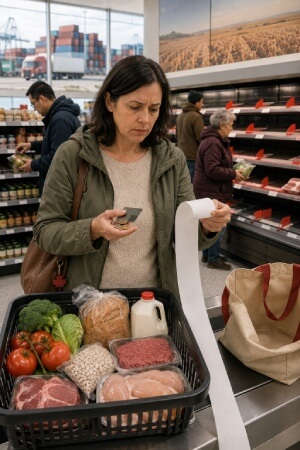
Statistics Canada has been following food-at-store inflation over the last three years at rates between 3.1% and 4.5%. In July of 2026, it was at 4.3%, before the 3.2% overall inflation rate. The average across all categories far exceeded that range at 6.3%, and in some cases far beyond, like fresh vegetables: 9% increase to the food category, tomatoes individually up over 45% from a year previous, beef increased by over 13% in cost year-over-year from July of 2026 to July of 2027, while lamb up almost 25%.
The research published by the Bank of Canada notes it takes from six to nine months for the lag to occur for events-like an overseas cost shock, poor crop harvest (drought, cocoa yield), a change in tariff regime to be reflected on the shelf in Canada. That, in theory, makes the lag behind food commodity’s cost on average over last two years. And That, is why this food inflation rate will persist beyond other rates of inflation.
The pressure on lower-income households has never been stronger; according to a study completed by Statistics Canada for the 12 months ended October of 2026 household in lowest-income quintile had spent on average over 27% of their disposal income on food versus only 5% of total disposal income of highest- income quintile; understanding the problem it’s not individual budgeting but systemic is crucial, not just change habits on how to budget, change habits on how you purchase your food.
To some extent, the reason why food inflation has proved quite sticky in 2026 has to do with source of the pressure. Many price pressures ultimately derive from globally traded commodities and imported products, instead of domestically set prices that consumers could influence through smarter budgeting techniques. For example, when global chicken prices likely rise further as demand siphons away from beef, that category-wide shift in commodity demand may not show up at Canadian store’s consumer price list for over a year and more; understanding, that this is not individual blip, but category trend for the next year will create opportunity to adjust the meal planning, in lieu of hoping for price to drop in a near future.
Start with Unit Price, Not Shelf Price
The sticker price on a package tells you almost nothing useful. A 500g bag of rice at $3.99 and a 2kg bag at $14.99 look close in price, but the second one is cheaper per gram. Canadian grocery stores are required to post unit pricing (price per 100g, per litre, or per item) on the shelf tag, usually in small print below the item price.
Where Unit Price Saves the Most
Unit price differences are largest in categories where package size varies a lot: cereal, snack foods, condiments, and cleaning supplies. A family-size box is almost always cheaper per serving than the small box, but store-brand versions frequently beat name-brand family sizes too. Comparing unit price across both size and brand, not just one or the other, is where the real savings show up.
Watch for Shrinkflation
Package sizes have been shrinking across Canadian grocery aisles for several years, a trend often called shrinkflation. A cereal box that used to hold 425g might now hold 350g at the same price. Unit pricing catches this since it is calculated on current package weight. Checking it before you buy, rather than assuming the price you remember still applies, protects you from paying more for less without noticing.
Building the Habit into Your Shopping Trip
Unit price comparison only helps if you actually do it every trip, not just occasionally. A simple approach is to pick your five or six most-purchased items (rice, pasta, milk, bread, coffee, cooking oil are common ones) and get familiar with what a good unit price looks like for each. Once you know that a reasonable price for rice is somewhere around $0.30 to $0.40 per 100g, you can spot a bad deal without doing math in the aisle every time. That reference point is worth more over a year than a single big comparison shop.
Build Meals Around Cheaper Protein
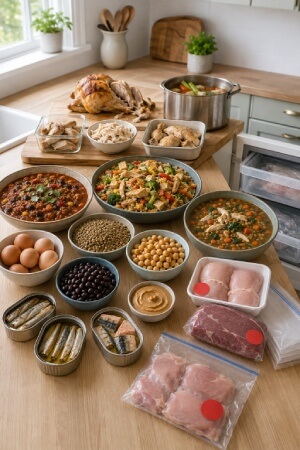
Beef prices rose over 13% in the past year, and chicken is expected to keep climbing through 2027 as demand shifts away from beef. Protein is usually the most expensive part of a meal, so this is where budget adjustments matter most.
Lower-Cost Protein Sources
- Dried or canned lentils, chickpeas, and black beans, typically $1.50 to $3.00 per kilogram dry
- Eggs, still one of the cheapest complete proteins per gram despite recent price pressure
- Canned fish like sardines, mackerel, and salmon, which cost less than fresh and keep in the pantry
- Chicken thighs instead of breasts, usually 30 to 40% cheaper per kilogram with more flavour
- Tofu and other soy proteins, priced well below most meat cuts
- Peanut butter and other nut butters as a protein source in breakfasts and snacks
Stretching Meat Further
You don’t have to cut meat out to cut the cost. Using smaller portions of meat as one ingredient in a dish, rather than the centre of the plate, is standard practice in cuisines around the world for good reason. A stir-fry, chili, or soup built mostly from vegetables, grains, and legumes with a smaller amount of meat added for flavour delivers a similar protein hit at a fraction of the cost of a meat-first plate.
Buying Meat Strategically
Meat prices fluctuate on a predictable weekly cycle at most Canadian grocery chains, with markdowns on items approaching their sell-by date usually appearing in the evening or early morning.
Buying reduced-for-quick-sale meat and freezing it immediately is a reliable way to get regular cuts at a discount, provided you’re comfortable planning meals a few days ahead rather than shopping same-day.
Buying a whole chicken instead of pre-cut pieces is another consistent saver. This works because whole birds are almost always cheaper per kilogram than breasts or thighs sold separately, and a single chicken can be broken down into several meals plus a stock base from the carcass.
Frozen and Canned Foods Deserve a Second Look
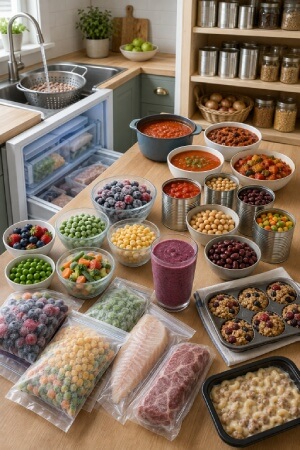
There is a persistent idea that frozen and canned foods are a nutritional downgrade from fresh. For most vegetables and fruit, that is not accurate. Produce destined for freezing is typically picked and processed within hours, locking in nutrients at their peak. Fresh produce, by contrast, can sit in transport and on shelves for days or weeks, losing vitamin content along the way.
When Frozen Wins
Frozen vegetables are almost always cheaper per serving than fresh, especially outside of the local growing season, and they don’t spoil on a schedule that punishes you for buying a bit too much.
Frozen berries, peas, corn, and mixed vegetables are reliable staples that hold their nutrition well through cooking. Frozen fruit in particular is worth leaning on for smoothies and baking, where the softer texture after thawing doesn’t matter and the price gap versus fresh, out-of-season fruit can be significant.
Getting the Most from Canned Goods
Canned beans, tomatoes, and vegetables are shelf-stable, cheap, and nutritionally close to their fresh counterparts once you account for the cooking process fresh versions go through anyway. The one thing worth checking is sodium content on canned vegetables and beans; rinsing canned beans under water before cooking cuts a meaningful amount of added sodium. Canned tomatoes in particular are a workhorse ingredient: a single can can anchor a pasta sauce, a chili, a soup base, or a braise, and they’re rarely more than a couple of dollars.
A Note on Frozen Meals and Ultra-Processed Convenience Foods
Frozen vegetables, fruit, and even plain frozen fish or meat are a different category from frozen prepared meals loaded with sodium and preservatives. The budget and nutrition case for frozen produce doesn’t extend automatically to every item in the frozen aisle, so it’s worth keeping that distinction in mind rather than treating “frozen” as a single blanket category.
Use Loyalty Programs and Flyer Apps Without Overcomplicating It
Canada’s major grocery loyalty programs, PC Optimum and Scene+ chief among them, can realistically save a household a few hundred dollars a year when used consistently. This is possible because of weekly personalized offers and points multipliers rather than a flat rebate on every purchase. The base earn rate on groceries alone is usually modest, often around 1%, but stacking personalized offers loaded onto the app before a shopping trip can push the effective savings considerably higher on the items included in that week’s deals.
Flyer Comparison Apps
Apps that aggregate weekly flyers from multiple chains let you compare prices across stores before deciding where to shop, or build a list around whatever happens to be discounted that week. This is most useful for shelf-stable items you buy regularly anyway; it’s less worth the effort for a one-off purchase, since the time spent comparing four stores’ flyers for a single item rarely pays off.
Keeping the System Simple
It is easy to let a loyalty and coupon-stacking system become a part-time job, checking five apps before every trip. A simpler approach that still captures most of the benefit is to pick one primary loyalty program tied to the store you already shop at most, check its app for personalized offers before each trip, and let the rest go. The marginal savings from perfecting a multi-app, multi-store system rarely justify the time for a typical household.
Reduce Household Food Waste
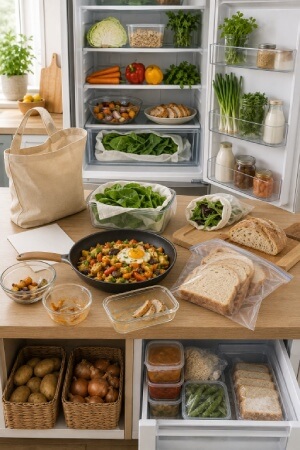
But food waste is so much more than the planet; its cash that is simply disappearing from your kitchen. Food waste has been measured nationwide by Food Waste Love Hate Waste Canada and Second Harvest, and even while the numbers fluctuate based on the methodology, in most cases it shows that there is a significant portion of food that homes waste that could be easily avoided, predominantly items that spoiled or went bad before being utilized rather than leftover inedible matter.
Practical Waste-Cutting Habits
- Do a “shop your fridge” check before writing a grocery list, so you’re not rebuying what you already have.
- Store produce properly: most leafy greens last longer wrapped loosely in a damp towel, while potatoes and onions need a dark, cool spot away from each other.
- Understand the difference between “best before” and expiry dates; best-before dates are about peak quality, not safety, and most foods are fine well past that date if stored properly.
- Freeze portions you won’t use in time rather than letting them turn in the fridge.
- Plan one “leftover night” or “use it up” meal into the week’s rotation.
Where Waste Actually Happens
The culprits for the majority of avoidable food waste are a few key repeat offenders and include:
- Bagged greens and produce which quickly spoil and go to waste
- Bread that becomes stale long before the loaf is finished
- Fresh produce purchased with the best of intentions for a recipe which is never made
Focusing on these areas-rather than the daunting task of rethinking all food storage practices-is typically the most effective way to decrease your landfill or compost contribution.
Get More Meals from Staple Ingredients
A handful of inexpensive kitchen standards, bought in bulk whenever possible, to serve as a base to a full week of varied, not monotonous, foodstuff. A stash of grain, spaghetti and all forms of macaroni, canned beans and tomatoes, onions, as well as a spices and seasonings is your jumping-off level for cooking up cuisine that come with 100+ nations all through the world. Develop an inventory using your kitchen standards as your basis, around of just about any 5 to six basics, and then interchange fresh vegetables, fish or meat along with spices for the purpose of some 100 distinct fare with similar foundations within it.
For most kitchen standards, this will give us you reduced item costs on the bulk; this does depend, having said that, on the reality you’ve obtain the place wherein a pantry could continue such items.
You will end up in danger associated with buying way more, and in order to toss it out whenever getting to expire when it turns into. You might have possibly saved cash by simply purchasing within smaller sized amounts at your regional groceries shop where an bulk-buying storage space area (or even bin) may offer considerably good yields with regard to much much better value, although for solitary or dual dwellers, the value might also be a function of your own need to use thus considerably foodstuff; this makes your pantry the biggest threat for acquiring much more stuff than needed.
Spices and Flavour on a Budget
Spices are an excellent category in which to spend over needlessly. While a tiny jar may have a higher per gram price than the bulk bin or ethnic grocery store version, the same spice at either of the latter will often be a fraction of the price. A good basic but well-rounded spice collection will help keep staple based meals in rotation better than almost any other kitchen investment you make.
Seasonal Buying Still Matters
Although produce is imported, buying in-season in Canada or a close growing zone is usually more economical-less distance to travel and fewer days spent in cold storage. Think fall apples, squash and roots; summer berries and stone fruit; and perhaps even winter citrus from more southerly growing areas. It’s a less powerful change than changing the unit price or protein source, but layered on top of these other changes, it’s a natural way to eat differently throughout the year, with little additional mental effort.
Putting It Together
None of these habits need a complex system. Compare unit price not sticker price and combine eggs, canned fish and legumes with meat not instead of it. Then, don’t dismiss canned and frozen products.
Most importantly, try not to waste what you have already purchased. Small, regular choices like these drive a grocery bill down, not the singular, grand, one-month habit change.
With the kind support: