
Most people who give up on meal planning don’t give up because it’s not working, right? They quit because they tried to run a seven-day, three-meal, colour-coded system in week one and burned out by Wednesday. Meal planning that actually survives a busy household looks less like a spreadsheet and more like a short list of habits repeated every week. It is a rough plan, a real list, and a few hours of batch cooking that pay off for days.
Canadian households now put close to three-quarters of their food budget toward groceries and home cooking rather than restaurants and takeout, which tells you most people already know cooking at home is the cheaper option. The gap is usually time and decision fatigue, not willingness. A workable plan closes that gap, and it doesn’t need to be complicated to do it.
Plan the Week Loosely, Not the Day Precisely
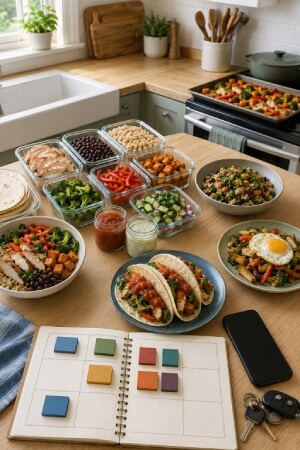
If you ask us, the overly prescriptive menu that mandates a particular recipe for each night of the week is extremely breakable. One overtime at work, one sniffly kid, and the meal plan you devoted the preceding Sunday afternoon to can self-destruct as people write their whole list off completely. A somewhat flexible system can work just fine outside the house.
The Component Approach
Rather than planning seven different recipes, simply prepare components that you could combine differently to make two or three proteins, two or three vegetables or grains, and one or two sauces or flavour bases for the week. The evening you have one hour you just roast the chicken and boil the rice, then just whip it all up, and then the next night if you don’t have that time maybe just combine that chicken, tortillas, and a jar of salsa, and have a whole new meal.
Build in a Flex Night
One night is also truly unscheduled (or leftovers, a fridge clearing stir fry, or breakfast for dinner). If you deliberately create some slack in the schedule, a surprise shift in your plans just means that flexible day is called on to do an unforeseen task.
Matching the Plan to Your Actual Week
If you don’t glance at your calendar before crafting a meal plan, then you’re really guessing. Plan by checking which nights have room for dinner and week night plans where the food needs to be fast and easy for a variety of different types of days. That 45-minute recipe that goes great with a night where there are absolutely no evening activities, for example. However, you’ll want that ten-minute sheet pan meal on a sports night to go with the evening meeting later in your week.
Shop with a List Built from the Plan
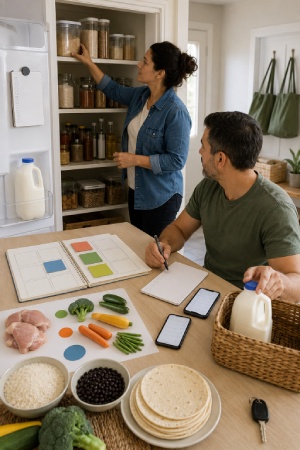
A grocery list built after you’ve planned meals, not before, is what actually controls spending. Walking into a store without a list and building meals around whatever looks appealing is how bills creep up and freezers fill with ingredients that never get used.
Shop the Sales, Then Plan Around Them
Look through the store’s weekly flyer (or app) to see what protein and produce are on sale before making your selections for the week. Ifchicken thighsare on sale, chicken thighs are what’s for dinner that week. If a vegetable is in season and on sale, that’s the vegetable you’ll make that week. This reverses the normal approach of deciding what you want to make and then purchasing it, instead allowing store markdowns to drive your decision-making, and it’s generally an easy way to save money.
Keep a Running Pantry List
A short list on the fridge or in a notes app where anyone in the household can jot it down when something runs low (rice, oil, a spice) prevents the mid-week discovery that there’s no cooking oil left. It also stops duplicate purchases of things that are already in the pantry, sitting behind something else.
Where Meal Planning Apps Fit In
Over the last few years, we’ve seen a growth in apps specifically to help with meal planning, such as building a grocery list from the dishes you decide to eat during the week. Some apps even categorise these grocery items by aisle and may even show that you already own certain ingredients, ensuring you do not waste resources buying something you already have. A more simply structured, casual app that solely helps households share a single grocery shopping list will prove much more useful for the family to keep track of shared expenses than a completely meal planning app providing the user with recipes and nutrition facts.
Highly detailed apps designed with AI and even creating an entirely set week menu should really target the market suffering from decision paralysis.
However, if you know the type of meals you usually prepare at home, it may simply be a waste of your time to engage in anything so demanding. Know your individual or family requirement before choosing an app.
Shared Lists for Multi-Person Households
In any household with more than one adult doing the shopping or cooking, a shared list that updates in real time (whether that’s an app or a shared note) avoids the classic problem of two people buying milk on the same day while nobody buys the thing that’s actually needed. This matters more than which specific app or method is used; the value is in the shared visibility, not the particular tool.
Batch Cook Once, Eat from It All Week
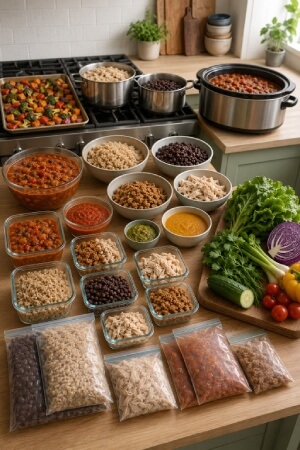
Cooking twice the volume rarely takes twice the time. Roasting a full tray of vegetables costs almost nothing extra over roasting a half tray, and a pot of grains or beans scales the same way. The time savings show up later in the week, not on cooking day.
Here are some food choices that you can cook and freeze well:
- Soups, stews, and chilis, which often taste better reheated the next day.
- Cooked grains like rice, quinoa, and farro, portioned into freezer bags.
- Cooked beans and lentils, home-cooked or drained canned.
- Shredded or cubed cooked chicken, ground meat, or plant-based crumbles.
- Sauces and flavour bases like tomato sauce, pesto, or curry paste blends.
What to Prep Fresh Each Time
Leafy greens, delicate herbs, and anything meant to stay crisp (like a fresh salad or a crunchy slaw) don’t hold up to batch cooking or freezing well. Prep those closer to the meal itself, and lean on the frozen or pre-cooked components to fill in the rest of the plate.
Setting Up a Batch Cooking Session
A batch of cooking requires planning like the roughly-ordered list of steps provided above rather than jumping in and simply hoping it all comes together time-wise. Something oven-based, whether a batch of roasted vegetable (as provided at top) or a whole chicken, should begin the process because oven-bound goods can tolerate more attention for at least some portion of their time. When things are in the oven, it’s possible to focus on any number of stovetop activities such as heating a pot of grain or beans.
Doing two to three hours of work on the weekend can produce most of a week’s worth of ingredients for a family, and this time-saves rather than adds on, the same time that an oven roasts some vegetables, a stove simmers some grains or beans and a slow cooker warms up some stew.
Portioning for Different Appetites
Households with a combination of ages and appetites benefit from portioning batch-cooked components into a few different container sizes rather than one standard size for everyone. A teenager and a young child eating from the same freezer stock need different amounts, and having smaller and larger portions already divided up removes a small daily decision that otherwise falls on whoever’s serving dinner.
Give Leftovers an Actual Plan
Leftovers fail when they’re an afterthought, shoved in a container and forgotten until they’re no longer appetizing. Treating leftovers as a deliberate part of the week’s meals, not a fallback, keeps them from turning into waste.
Repurpose, Don’t Just Reheat
Extra roasted vegetables become a grain bowl the next day, extra rice becomes fried rice, extra roast chicken becomes a sandwich filling or a soup base. Thinking of Tuesday’s dinner as an ingredient for Thursday’s lunch, rather than a meal that has to be eaten identically twice, makes leftovers feel like variety instead of repetition.
Label and Front-Load the Fridge
A container with a date on it gets used; an unlabelled one gets pushed to the back and forgotten. Keeping the oldest leftovers at the front of the fridge, visible at eye level, means they’re what gets grabbed first instead of what gets thrown out weeks later.
Building a Leftover-Friendly Menu from the Start
Some meals adapt better as leftovers than others, by nature.A pot of grains, a roast or tray of roasted veggies, will naturally stretch into other dishes, no matter what else you have going.A meal already baked in a single dish and doused in sauce, such as an al forno, will most naturally, simply be reheated in its original form, no second act in mind. By having at least some of your week’s cooking in this flexible state of components vs composed dish you remove the second thinking down the line.
Keep Breakfasts and Lunches Simple
Dinner tends to get most of the planning attention, but breakfast and lunch are where busy households lose the most time to decision fatigue on weekday mornings. Overnight oats, egg muffins, or a batch of breakfast burritos made once and portioned for the week remove that decision entirely on weekday mornings.
The same applies to lunches: a few grain-bowl or wrap templates, filled differently from the week’s batch-cooked components, cover most days without requiring a new recipe.
Templates Over Recipes
You can use a template such as a grain, a protein, a vegetable, a sauce, assembled in a bowl or wrap, which covers far more ground than a fixed weekly lunch recipe, since it flexes automatically to whatever’s left in the fridge from dinner prep. Teaching everyone in the household the template, rather than a specific recipe, means lunch doesn’t require a decision every single day, just an assembly step using whatever’s on hand.
Getting Kids and Partners Involved
Meal planning in a busy household usually falls on one person by default, and that’s often where the burnout starts. Involving other household members, even in a small way, spreads the mental load. Kids old enough to help can wash vegetables or stir a pot during batch cooking sessions; a partner can take ownership of the shopping list or one specific meal each week. This doesn’t need to be a formal division of labour to help.
Even having someone else glance at the week’s plan and flag a night that won’t work removes a layer of guesswork that otherwise falls on whoever built the plan alone.
Handling the Weeks That Fall Apart Anyway
Even a well-built plan has weeks where nothing goes as expected: an illness in the house, a work trip, a schedule that changes twice in three days. Treating these weeks as an exception to work around, rather than a sign the system has failed, keeps one bad week from turning into three months of ordering takeout out of habit.
A Backup Layer
Keeping a small stock of true backup meals, the kind that need almost no active decision-making, gives the plan somewhere to fall back to instead of falling apart. A few bags of frozen dumplings, a couple of jars of pasta sauce next to a box of pasta, canned soup, or a stash of frozen pre-portioned batch-cooked meals from a calmer week all serve this purpose. The goal isn’t nutritional perfection on the hardest nights but to have something that removes the need to decide anything at all when there’s no bandwidth left to decide.
Restarting Without Guilt
A week that falls apart doesn’t need to be treated as a failure that has to be made up for. The easiest way back into the routine is picking the next natural planning moment, usually a weekend, and starting the cycle again rather than trying to retroactively fix the week that didn’t go to plan. Households that stick with meal planning long-term tend to treat interruptions as normal and expected, not as evidence the system doesn’t work for them.
Adjusting the System as Life Changes
A meal-planning routine that is well-suited for a family with very young children is likely to looks different from the plan suited to the same family five years later, with ravenous teenagers, than to a family with younger children that is now a house with only two occupants after the children move out. The method, make a loose plan, shop off a list, use a bulk-cooking style, and plan in leftovers with intention, remains fairly constant but the actual amounts, specific recipes, and time to prepare and serve them are adjusted as needed. Periodically reviewing the plan, every few months at least, instead of assuming that what worked last year should continue to work this year, will ensure the plan does not silently crumble at the seams.
Signs the System Needs a Refresh
Some tell-tale signs that it’s time to tweak things: those handful of meals show up way more often than anyone would choose, you keep finding your groceries budget climbing even when you try to shop sales, or now you’ve got a freezer of untouched meal-prep that you no longer actually feel like or have time for. Again, none of this proves the whole concept has fallen apart – it just means the details on top of the foundations of the concept need to change based on who lives there now.